Advanced Murdoku strategy
Murdoku Advanced Strategy: solve hard cases without guessing
Hard Murdoku cases stop yielding to one clue at a time. The reliable next step is to maintain candidates, combine two constraints at their intersection, and delay any placement that is only a hunch. This is a no-spoiler method for deriving the next forced move.
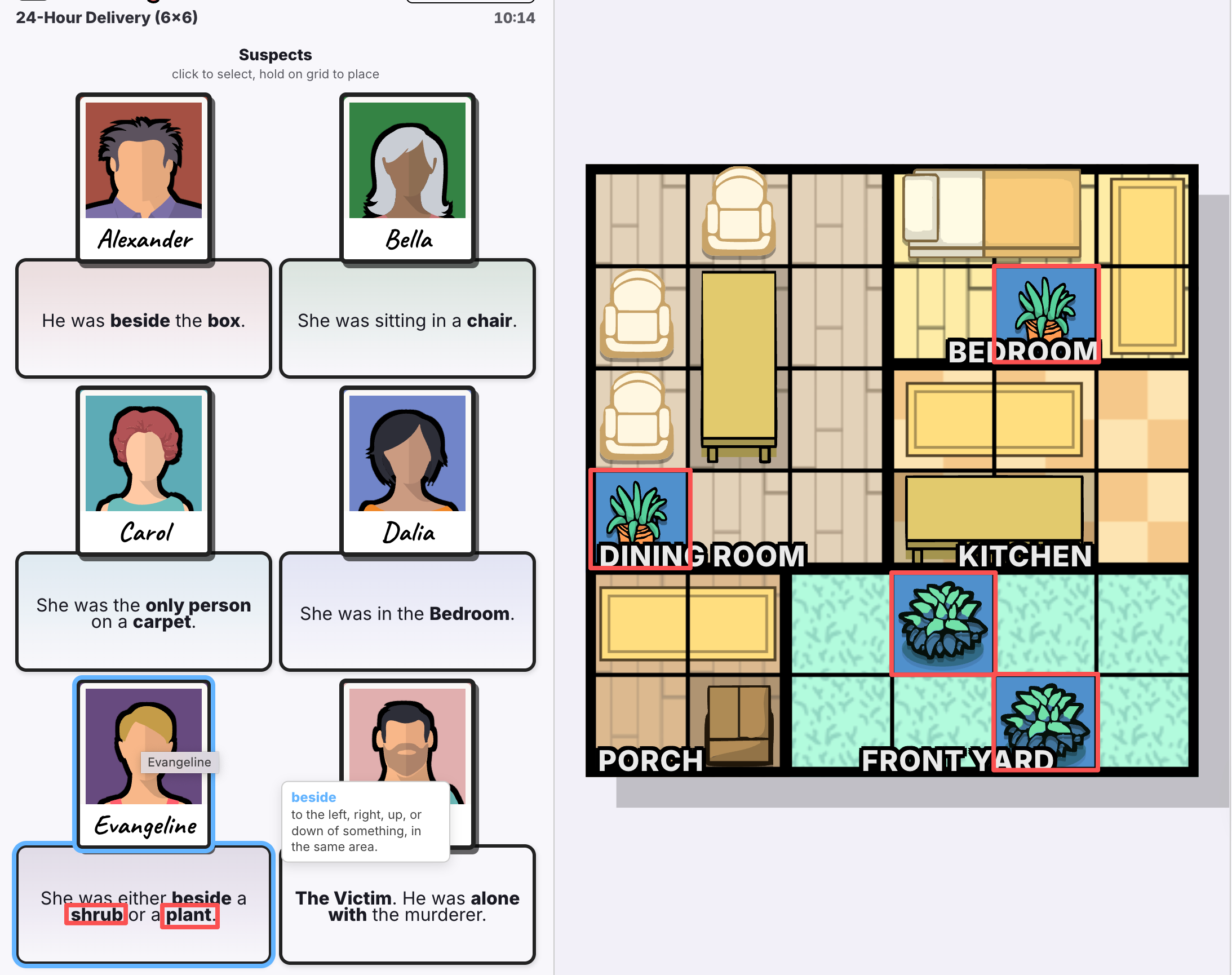
- Best use
- Hard cases and any board where the obvious placements are gone
- Target
- Solve without guessing by proving eliminations, not testing a hunch
- Core rules
- One person per row and column; every clue and region condition stays true
- Endgame
- Use the victim-and-murderer condition as a consistency check
What “without guessing” actually means
A no-guess solve does not mean placing a character the moment a square looks plausible. It means every X mark and every placement follows from a stated rule: a fixed object, a row or column conflict, a same-region restriction, or a relationship clue. If two candidates still satisfy everything you have used, leave both open.
That distinction matters on hard cases. Different players can reach the same deduction in different orders, so this guide does not prescribe one universal path. The practical goal is to exhaust every checkable deduction before a placement is confirmed, rather than test a hunch.
Build a candidate ledger before chasing clever clues
For each suspect, mark only the squares that survive the direct facts. Start with a named room, a unique object, a fixed row or column, or a blocked square. Then immediately cross out the same row and column for everyone once a person is confirmed. A small, accurate candidate list is more useful than a full board of untested placements.
- Write the reason beside a strong elimination: object, row, column, region, or relationship.
- Separate a confirmed placement from a candidate mark; do not let a visual guess become a fact.
- Re-scan every suspect after a placement, because one row-and-column lock can shrink several lists at once.
Turn relationship clues into map filters
Words such as beside, north of, south of, in the same area, and alone are not vague story flavor. Translate each one into squares that could still work. For example, a candidate beside a plant must share an edge, not a corner, with a qualifying plant square in the same area, while a candidate in the same area must remain inside that colored or labelled region. Two squares can touch on the map yet fail a same-region condition if a boundary separates them.
Relative clues get stronger when one side is already restricted. Rather than trying to place both people at once, reduce the reference person's candidates first; then redraw the possible squares for the other person from each remaining reference square.
Look for intersections, not isolated clues
A difficult case often advances when two medium-strength clues overlap. Keep asking which candidate survives both filters, rather than which clue sounds most informative by itself.
| First filter | Second filter | Useful question |
|---|---|---|
| A named region | A free row or column | Which square is still legal in both? |
| Beside an object | Same area as another suspect | Which adjacent squares share the required area? |
| North/south relationship | A confirmed row or column | Which remaining candidates preserve the direction? |
| Two possible squares | Another suspect's candidate list | Does one option force an impossible row, column, or region collision? |
Use the victim and murderer rule late, then audit the board
The murder condition is powerful because it connects the completed placement to the story: after the board is solved, the murderer is the person alone with the victim in the same area. Treat it as an endgame constraint and a check on a near-complete board, rather than a license to name a killer early.
Before submitting, audit every person in the same order: their personal clue, row, column, area boundary, and any paired relationship. A contradiction is useful information. Roll back the earliest unsupported placement instead of changing several later marks at once.
Murdoku advanced strategy FAQ
Can every hard Murdoku case be solved without guessing?
A disciplined solve should rely on deductions rather than trial placements, but players can find those deductions in different orders. Work through every checkable elimination first and leave genuinely unresolved candidates open until another constraint forces the next move.
What should I do when no clue gives a direct placement?
Compare candidate sets. Intersect a room, object, direction, or region clue with remaining row and column availability, then see whether one option creates a contradiction for another person.
When should I use the murderer condition?
Use it late. It is most useful when the victim and most positions are already constrained, because the murderer must be alone with the victim in the same area after the placement is complete.
Do adjoining squares always count as the same area?
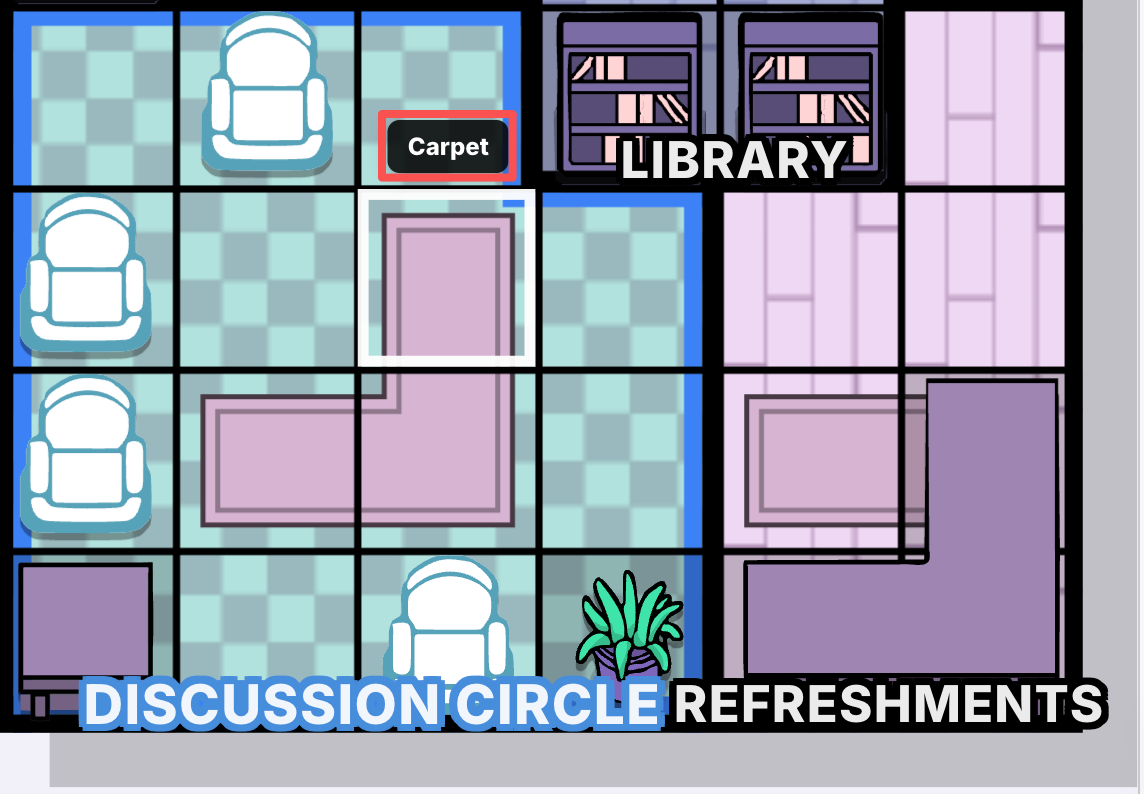
No. Check the map's region boundary and labels. Physical adjacency and membership in the same colored or named area are separate conditions.
Continue your Murdoku solve
Sources checked
This independent guide explains a solving method in original wording. Murdoku, its artwork, and its puzzle materials belong to their respective rights holders.